Christmas Decor
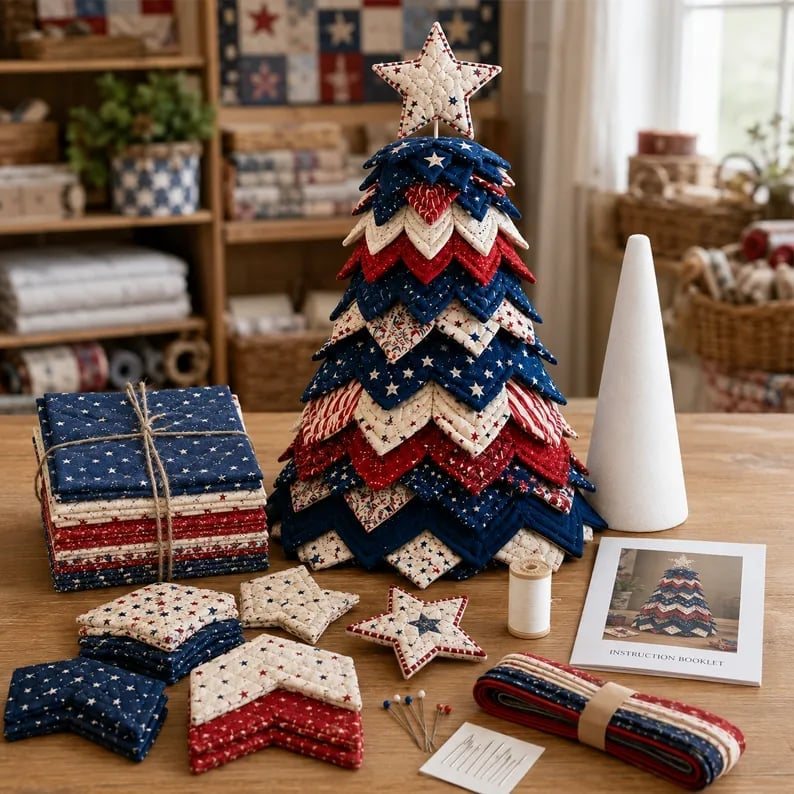
Americana Quilted Christmas Tree
Layered fabric strips that build a small quilted tree for a table.
$22.99
- Free shipping over $40
- 30-day returns, label on us
- Ships in 1–2 business days
Style: Americana Christmas Tree
- Free shipping on orders over $40
- 30-day returns, return label included
- Secure SSL checkout · PayPal accepted
- Tracked worldwide delivery
About this kit
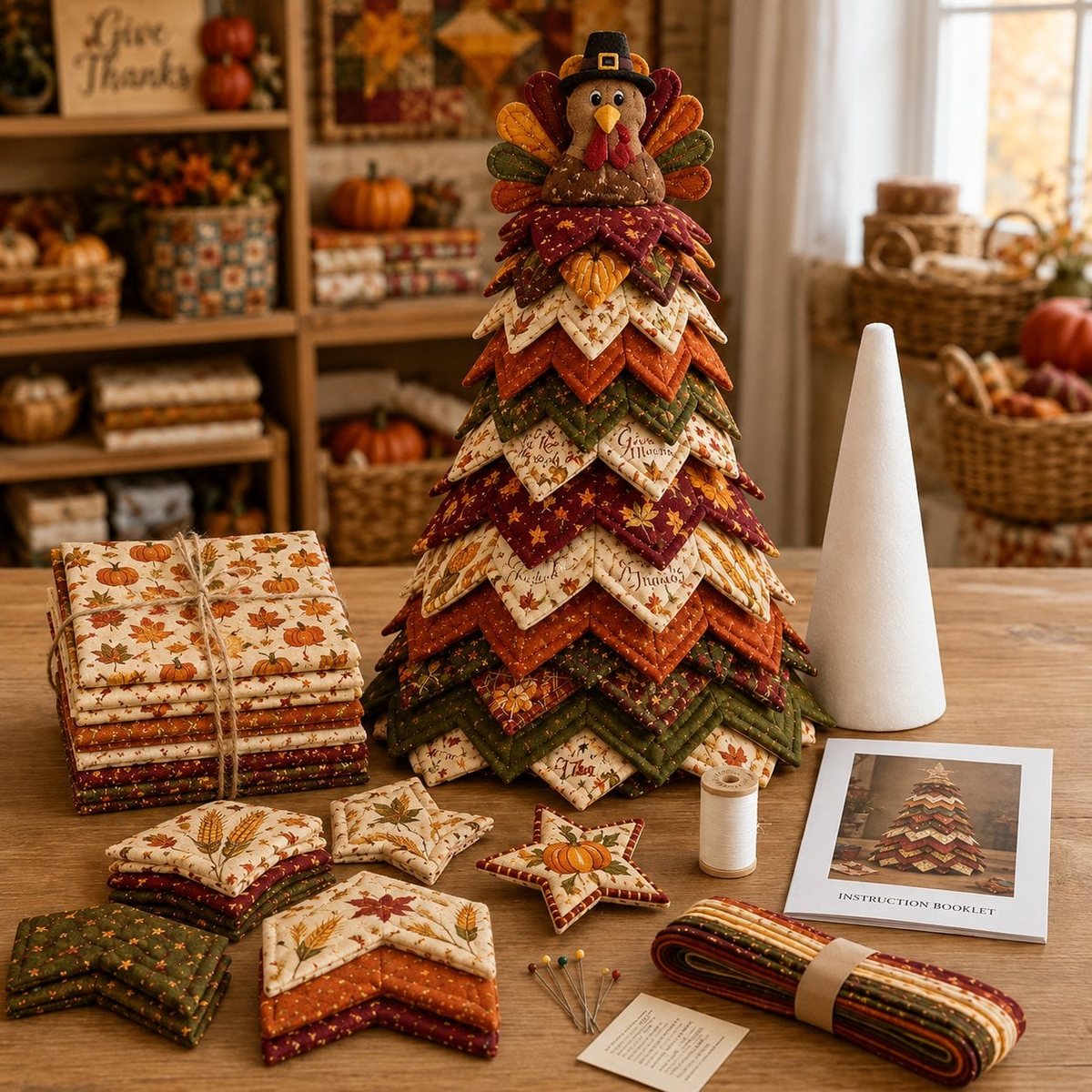
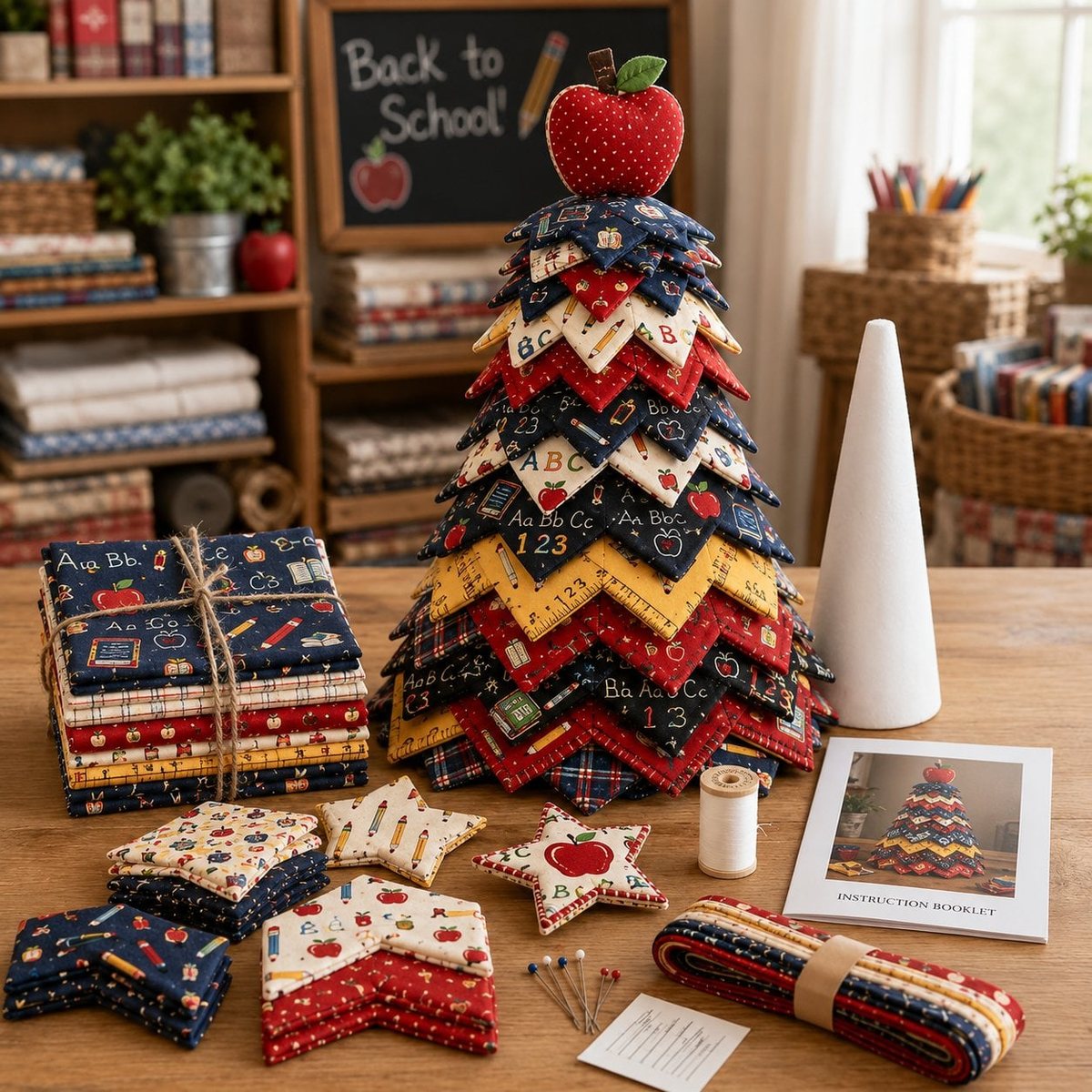
A fabric tree built up in overlapping zigzag layers from the bottom. Each layer is a strip stitched so it sits slightly proud of the one beneath, which is what gives the finished tree its ridged surface. It stands on a sideboard or a table rather than the floor, roughly the height of a coffee pot, and it comes out of a box every December the way a real tree does not.
What is in the kit
Fabric strips for the layered tree, the printed pattern, the step notes, and the fabric candy canes, stars and ornaments that finish it off. The pattern notes assume you can run a straight seam on a machine. Nothing here needs free motion work and there is no quilting through the layers, so the sewing is a series of straight runs rather than anything that has to be kept even by eye.
The five versions
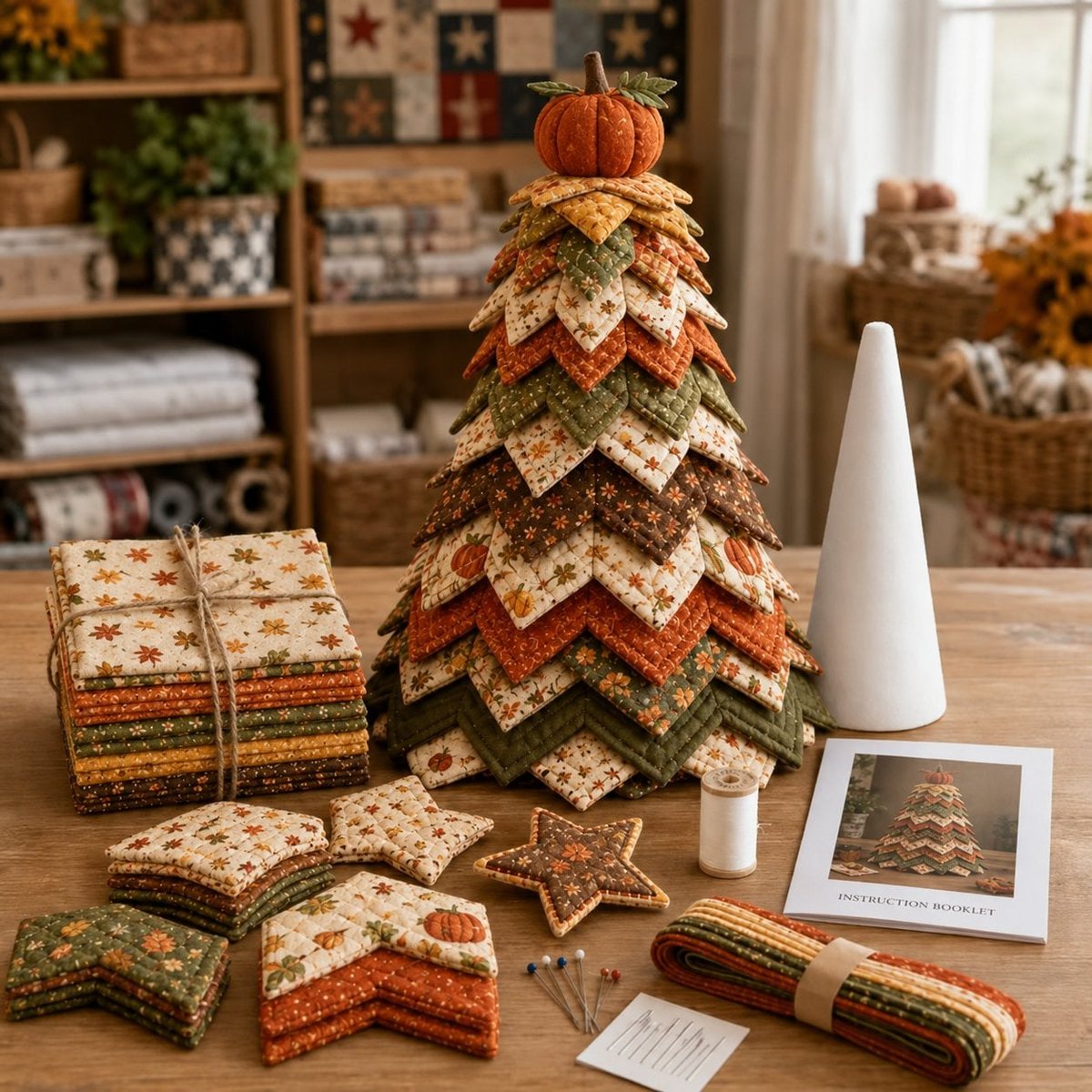
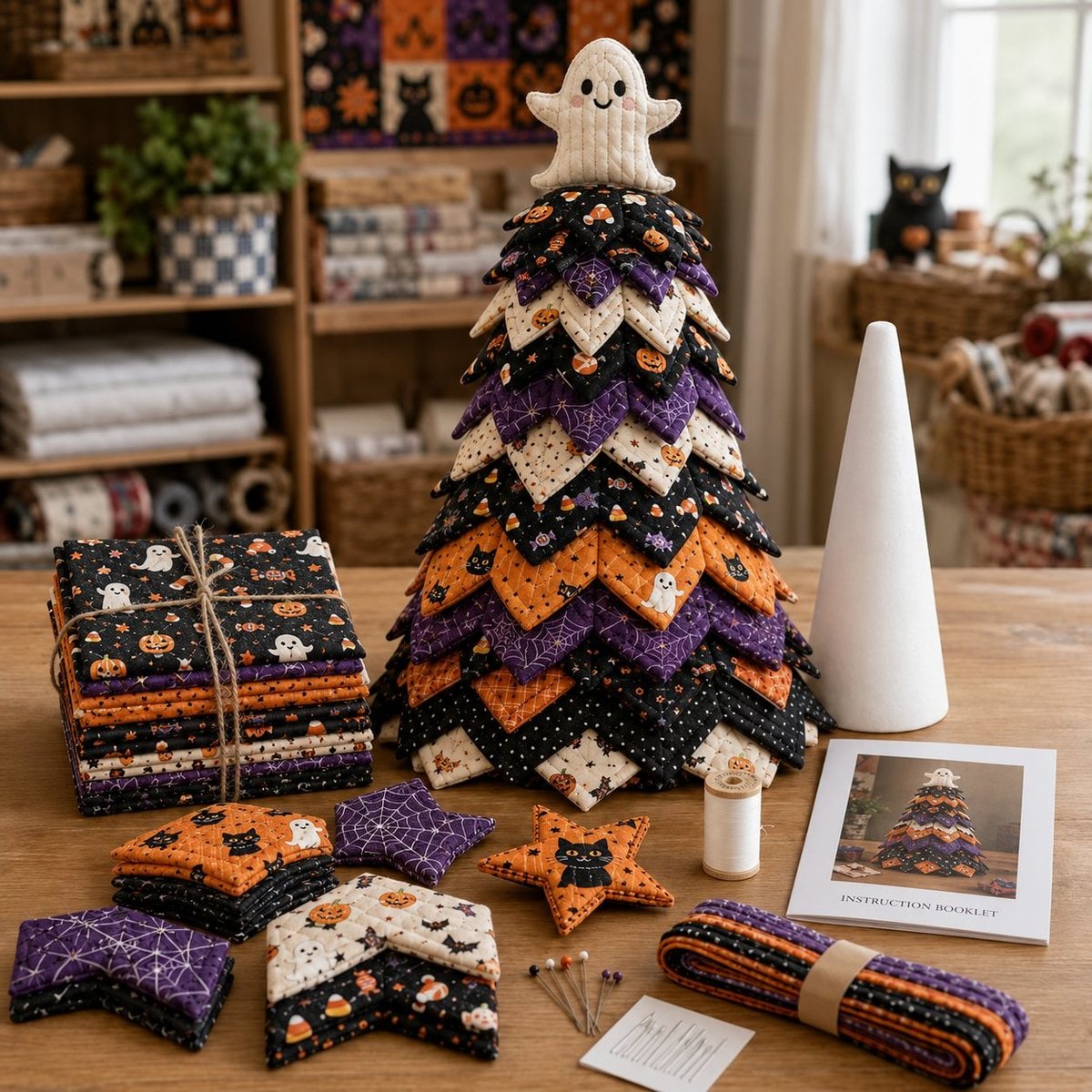
Americana is red, white and blue with stars. Autumn Harvest works in rust and cream. Halloween Patchwork goes black, orange and purple. Thanksgiving Harvest stays in warm reds and browns. Back to School Patchwork picks up red, yellow and chalkboard black. All five use one shape, so the difference is entirely in the fabric and the trims rather than in the cutting.
Building it in layers
You work from the bottom strip upwards. Each layer is stitched, folded and pressed before the next one goes on, so the tree grows in rows rather than being assembled flat and turned out at the end. Two or three rows is a sensible evening. Press as you go and the rows stay even; skip the pressing and the layers drift, which is about the only way this project goes wrong.
What you end up with
A freestanding fabric tree for a table, mantel or shelf. Because it is fabric, light falls across the ridges and the tree reads as textured from across a room. The fabric decorations sit loose rather than stitched down, so the arrangement is yours to change before it is finally pinned. Store it flat and dry through January and it comes out the same the following December.
Shaped, not printed
Layers of fabric give the tree depth rather than a flat outline.
Five colourways
One pattern, five different fabric sets.
A few evenings of work
Rows go on a layer or two at a time.
Specifications
| Type | Layered fabric tree kit |
| Build | Stacked strips stitched in overlapping rows |
| Fabric | Printed fabric strips in the chosen colourway |
| Finished look | Freestanding tabletop tree |
Where it goes
- On a sideboard
It stands up on its own, so it needs no hook and no branch.
- Next to a full size tree
The small version holds its own beside a big one.
- A couple of rows an evening
Press each layer before the next goes on and the rows stay even.
- Stored flat
Between Decembers it lies flat in a box, which is more than a real tree manages.
In the box
- Fabric strips for the layered tree
- Printed pattern and step notes
- Fabric candy canes, stars and ornaments
- Craft materials for the decoration
Care
Fabric likes a dry, dark shelf. Fold it along the same lines each year and it will crease there, so alternate the folds occasionally. Spot clean with a damp cloth and let it dry flat before it goes back in the box. Keep it away from a damp garage wall over the summer.
Common questions
Basic machine sewing is enough. The pattern is a set of straight seams and the layers are joined one at a time.
Close, not identical. Fabric placement and stitch lines vary, which is why no two come out the same.
A few evenings, depending on how long you leave each layer pinned. There is no deadline built into it.
Keep looking
Also on the shelf